
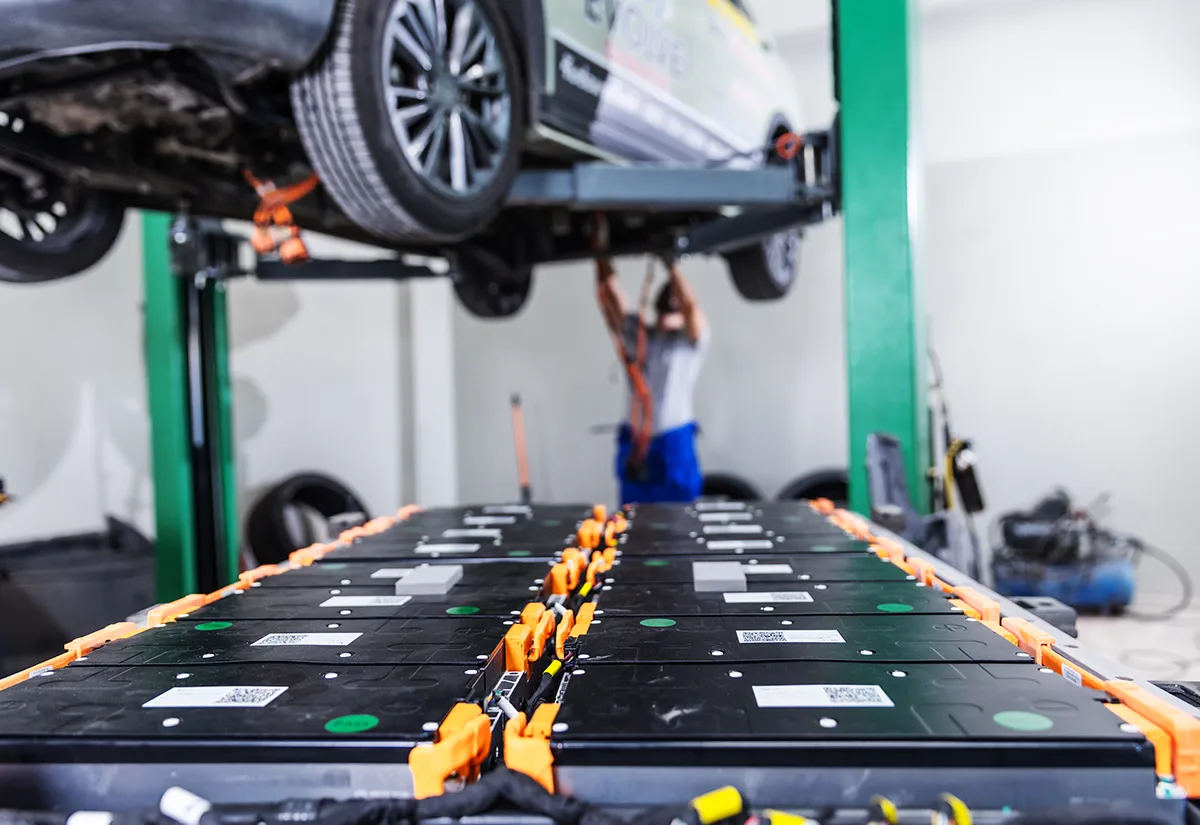
As the global transition toward electrification accelerates, Lithium-ion battery production continues to grow rapidly. Electric vehicles, renewable energy storage systems and industrial applications are driving increasing demand for reliable battery supply chains. At the same time, transporting batteries has become one of the most demanding areas of modern energy logistics. This makes Li-ion battery logistics a critical part of modern energy logistics and resilient battery supply chains.
EU Regulations and Dangerous Goods Compliance Define Li-Ion Battery Logistics
For a logistics facility in Vecsés, Hungary (near Budapest International Airport), operations are governed by European Union regulations, Hungarian national law, and European insurance benchmarks:
- European Building & Fire Safety Norms: Structural fire resistance and building partitions must comply with EN 13501-1 (fire classification of construction products) and EN 54 / VdS standards for automated fire detection and alarm systems.
- EU Battery Regulation (2023/1542): The primary legal framework across all EU member states governing battery lifecycle management, CE certification, recycling quotas, and mandatory Digital Battery Passports.
- ADR Regulations (European Agreement concerning Hazardous Goods): The binding legal framework across Europe governing road transport, handling, labeling, and packaging of Class 9 Dangerous Goods (UN 3480 for standalone batteries and UN 3481 for batteries in equipment).
- VdS 3103 Insurance Guidelines: In Germany, Hungary, and Central Europe, property insurers strictly enforce VdS 3103 guidelines, which define safety distances (e.g., 5-meter spatial separations, fire compartments, and dedicated quarantine areas) for storing medium- and high-capacity Li-ion batteries.
Li-Ion Battery Logistics Requires Specialized Handling, Transportation and Warehousing
Managing Lithium-ion (Li-ion) batteries requires a fundamental shift in supply chain management. These are not static commodities; they are active chemical storage devices that carry real operational risks if mishandled.
Thermal Runaway Makes Li-Ion Battery Logistics Uniquely Complex
The primary operational risk in battery logistics is thermal runaway, a chain reaction where an internal short circuit or structural damage generates intense, localized heat, releasing flammable off-gases and causing a fire that generates its own oxygen supply. Standard water sprinklers alone cannot easily extinguish a thermal runaway event, making specialized handling, early warning detection, and rapid isolation protocols critical.
1. Li-Ion Battery Transportation & Handling Rules (Class 9 Hazmat Rules)
- Strict ADR Compliance: Every pallet moving through European roads must adhere to ADR Class 9 packaging, labelling, and vehicle certification mandates.
- State of Charge (SoC) Controls: Under international transport safety rules, standalone Li-ion cells moving via air or sea freight are generally capped at a maximum 30% State of Charge to reduce internal energy potential during transit.
- Certified Shock & Thermal Packaging: Cells and packs must be packed using certified absorbent media (such as vermiculite or expanded glass granulate) to prevent inter-cell impact and contain localized thermal events during transit.
2. Safe Li-Ion Battery Warehousing and Fire Prevention
- Fire-Rated Compartmentation: Storing high-density battery volumes requires dedicated warehouse zones separated by fire-resistant walls (minimum F90 / 90-to-180-minute ratings) to isolate battery inventory from standard general cargo.
- Off-Gas & Early Thermal Detection: Modern battery warehouses utilize specialized gas-detection sensors (detecting early off-gassing like CO2 or VOCs) and multi-spectral infrared thermal cameras to spot micro-hotspots long before visible smoke or flames appear.
- Quarantine & Submersion Zones: Damaged, dropped, or unstable battery packs must be immediately removed to an outdoor, well-ventilated quarantine zone (positioned at least 5 meters away from core building structures) or placed into automated water/pyro-isolating submersion tanks.
Circular Battery Supply Chains: Second-Life Applications and Battery Refurbishment Create New Value
When an Electric Vehicle (EV) battery pack drops below 80% of its initial capacity, it can no longer deliver the acceleration or range needed for driving. However, the battery is far from useless:
- Rapid SOH Diagnostics: Using advanced Electrochemical Impedance Spectroscopy (EIS) or high-speed diagnostic routines, logistics facilities can evaluate a pack’s State of Health (SOH) in minutes upon dock arrival.
- Cascading Applications: Batteries that fail automotive criteria are disassembled at the module level and re-certified for Stationary Battery Energy Storage Systems (BESS) (e.g., storing solar power for industrial plants) or converted into power packs for industrial forklifts.
- Circular Supply Chain: Testing, refurbishing, and remanufacturing modules locally within Europe avoids high-carbon cross-border scrap shipping, keeps critical minerals inside the regional supply chain, and unlocks significant value from returned assets.
Partnering with GSP Logistics
Modern battery logistics balances regulatory compliance (ADR & EU norms), advanced safety systems, and second-life processing.
At GSP Logistics, we support manufacturers across the entire energy ecosystem with tailored logistics solutions for Lithium-ion batteries, Lithium-ion cells, battery packs, and inverters. Beyond transportation and warehousing, our energy logistics expertise covers battery logistics, inverter logistics, reverse logistics and refurbishment projects, enabling more resilient and sustainable battery supply chains. Through certified processes, experienced professionals, and a strong European network, we help our partners build safe, compliant, and efficient supply chains across Europe.